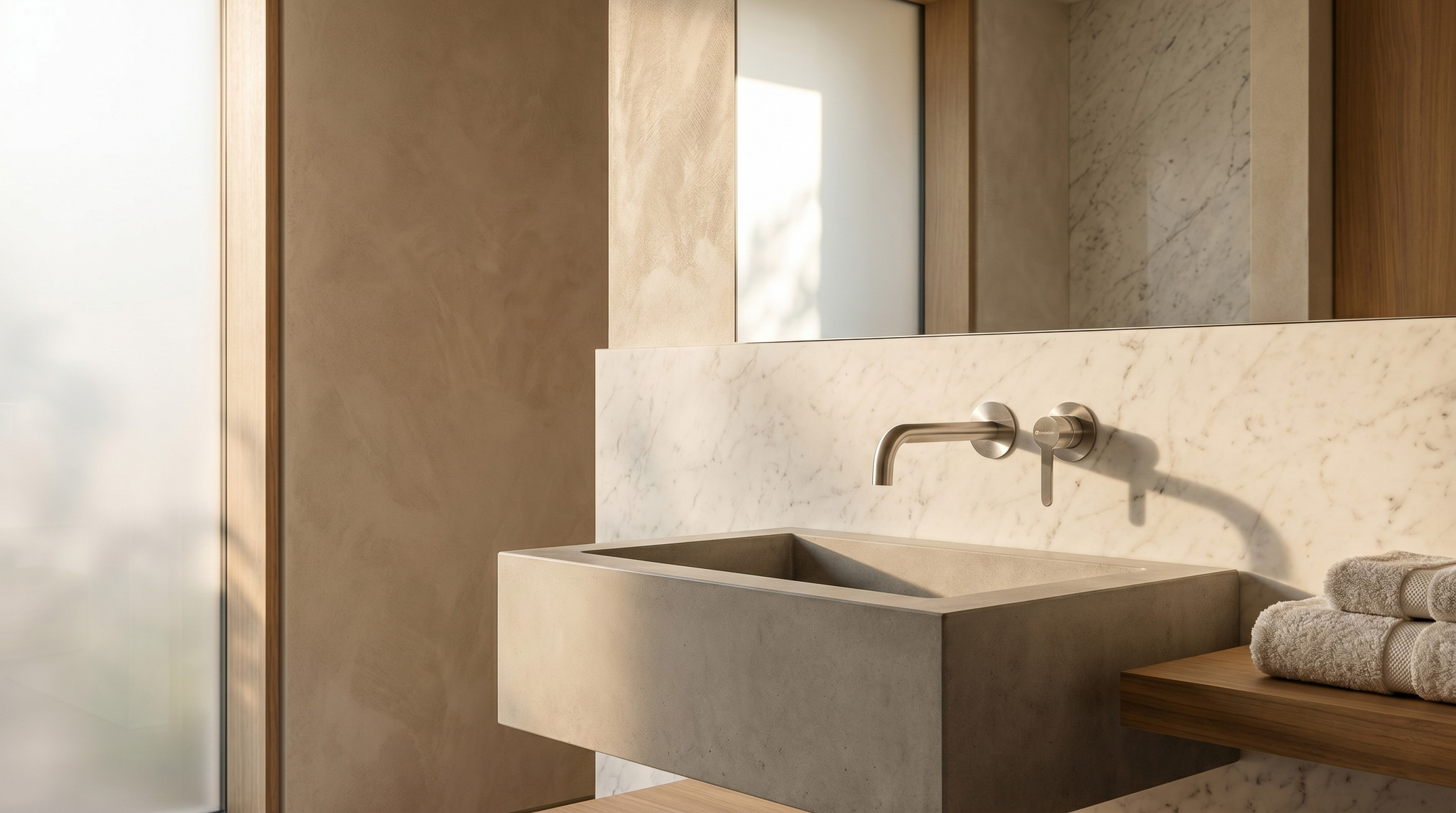
The spa bathroom is no longer the exclusive preserve of five-star hotels and high-end wellness retreats. Across South Africa, homeowners and designers are increasingly creating bathrooms that deliver a genuine spa experience: spaces defined by sensory calm, material quality, and the considered design that transforms daily routines into moments of genuine restoration. This guide explores the principles and product choices that define spa bathroom design, with a focus on how Meissen's range supports this aesthetic.
The spa bathroom is characterised less by any single feature and more by a collection of design decisions that work together to create a specific sensory effect. These decisions span materiality, spatial design, lighting, and, critically, the quality and specification of the fittings. Understanding the principles behind the effect makes it possible to achieve it in a range of spaces and budgets.
Materiality. Spa bathrooms prioritise natural and tactile materials such as honed stone, large-format porcelain with a texture resembling concrete or limestone, timber elements, and fabrics like linen and terry cloth. The materials should feel substantial and authentic rather than synthetic or smooth.
Light. Natural light is ideal; where it is not available, warm-toned artificial lighting that replicates the quality of late-afternoon sun is the next best thing. Harsh, cool-white overhead lighting is incompatible with the spa aesthetic.
Sound and silence. Spa environments are characterised by the absence of intrusive noise and the presence of calming sounds, specifically running water. A well-specified shower creates its own soundscape.
Sensory temperature. The temperature of a spa bathroom, both ambient and in the water, is carefully controlled. Underfloor heating, towel warmers, and thermostatic shower control all contribute to this dimension of the experience.
Minimalism and order. Spa spaces are uncluttered. Every object in the room earns its place; storage is concealed where possible; surfaces are clear.
In a spa bathroom, the shower is almost always the centrepiece of the design. More than any other element, the shower specification determines whether the bathroom delivers on the promise of a spa experience or merely looks like one.
The Meissen Miela shower system is designed precisely for spa-quality shower experiences. The thermostatic mixer plate provides the consistent temperature control that is fundamental to the spa experience: the ability to step into water at exactly the right temperature, every time, without adjustment. The 265mm x 192mm shower rose delivers a full-coverage rainfall pattern that feels enveloping rather than merely functional. And the complete system (rose, arm, hand shower, hose, outlet, and channel) is available in our designer finishes, enabling the shower to be designed as a coherent object rather than an assemblage of components.
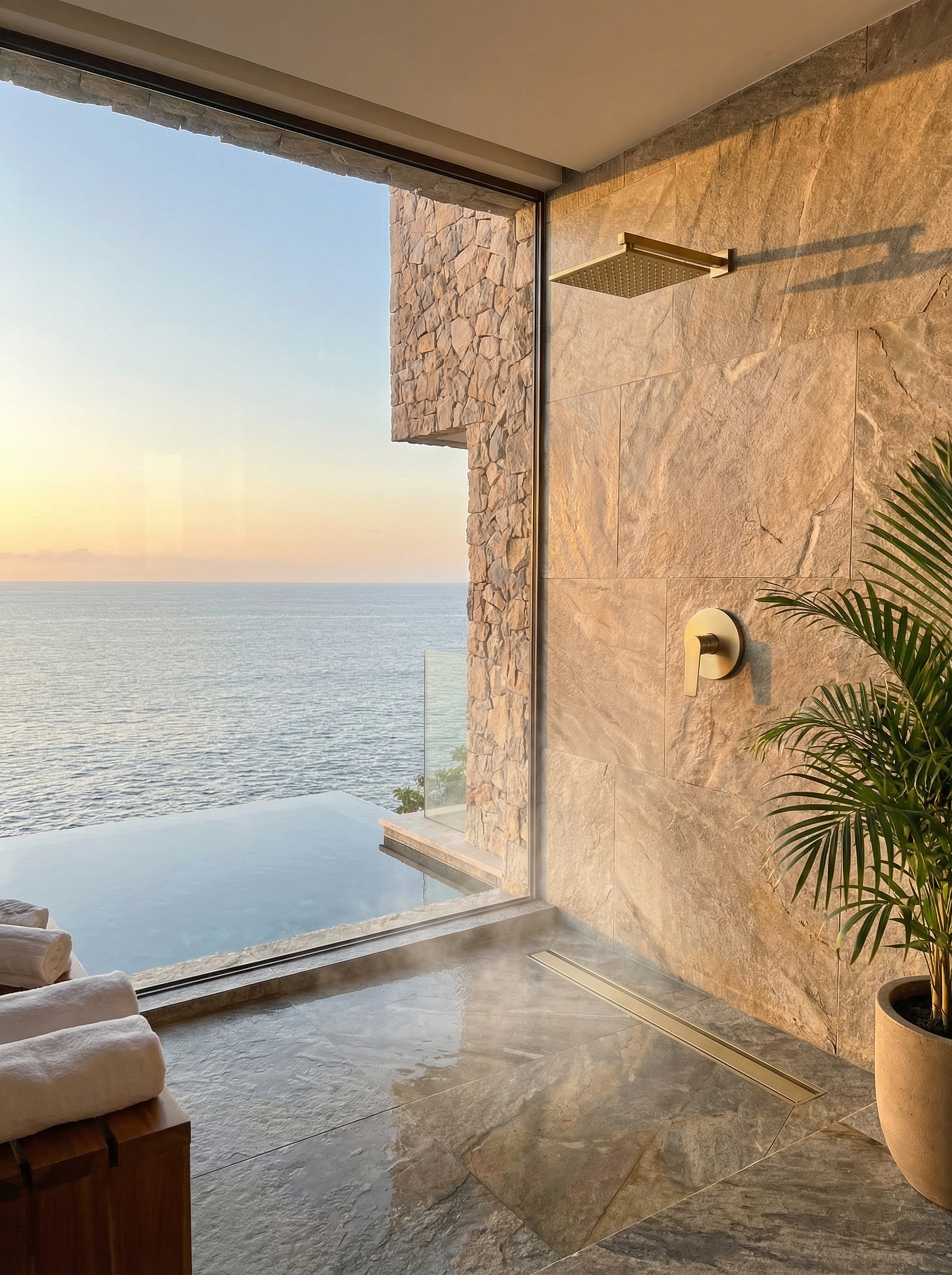
The choice of finish in a spa bathroom deserves particular care. The spa aesthetic rewards restraint and coherence: a single finish, applied consistently across all fittings and accessories, creates the sense of intentionality that spa design requires.
The most popular finish choices for spa-inspired bathrooms in South Africa in 2026 reflect the broader trend toward warmth and natural tonality:
Satin Brass pairs beautifully with warm stone, timber vanities, and natural plaster finishes. It adds warmth and a sense of considered luxury without the formality of polished gold.
Brushed Stainless Steel suits spa bathrooms with a cooler, more mineral palette (grey stone, concrete, and white), where its warm grey tone reads as sophisticated restraint.
Graphite and Double Black work well in spa bathrooms designed around a darker, more dramatic palette of deep tiles, dark stone, and a mood of intense atmospheric calm.
All five Meissen finishes (Chrome, Brushed Stainless Steel, Graphite, Double Black, and Satin Brass) are available across the complete range, including the Miela shower system and both the Avilo and Velina accessory collections.
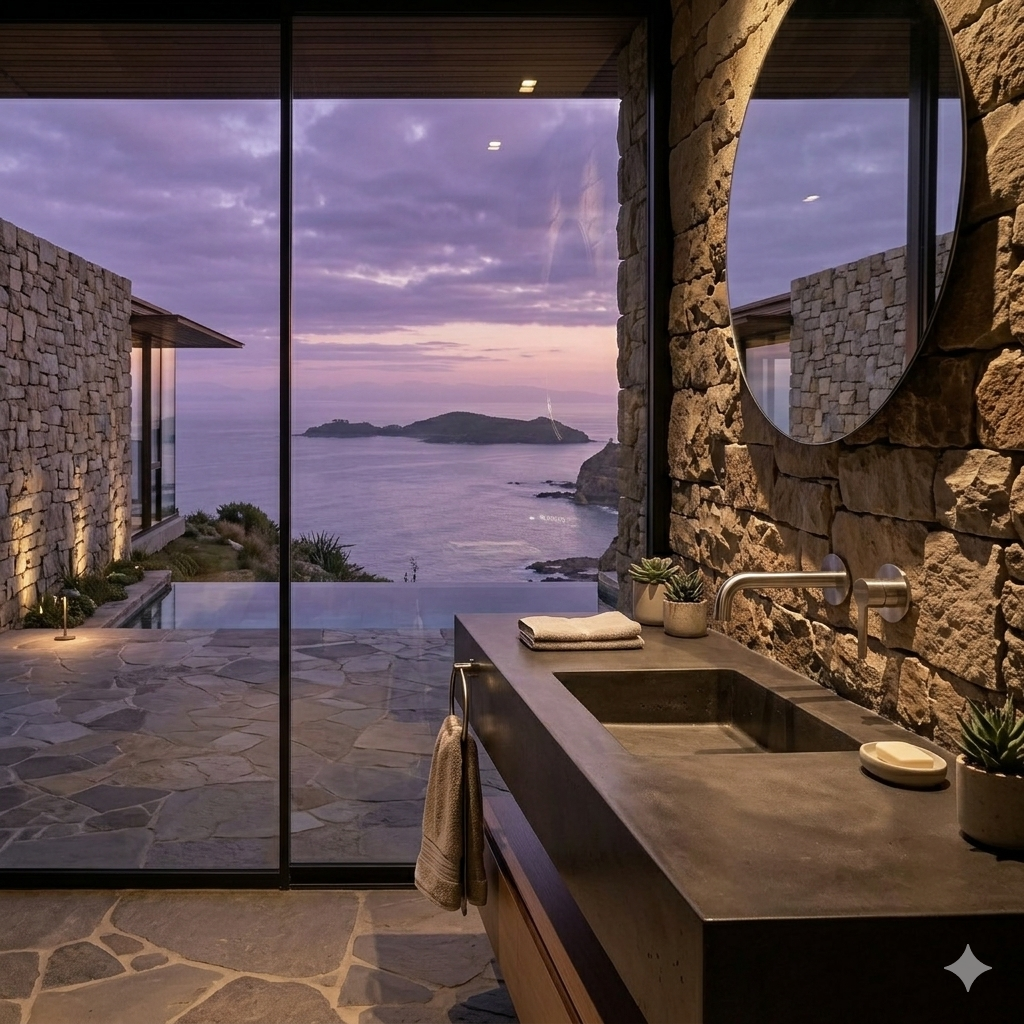
Function and RituaI in a spa bathroom, accessories are more than functional; they participate in the ritual of the space. The way a towel is stored, the ease with which a robe is hung, the placement of a soap dish: all of these small details contribute to whether the bathroom feels designed or merely equipped.
Meissen's Velina accessory range is particularly well-suited to the spa aesthetic, with its softer curves and organic profile. The 13-piece Velina collection includes towel rails, hand towel rails, robe hooks, shower shelves, soap dishes, soap baskets, toilet accessories, and tumbler holders, everything required to fully accessorise a spa-quality bathroom. The Avilo range, with its cleaner geometry, suits spa bathrooms that lean toward the architectural and minimal.
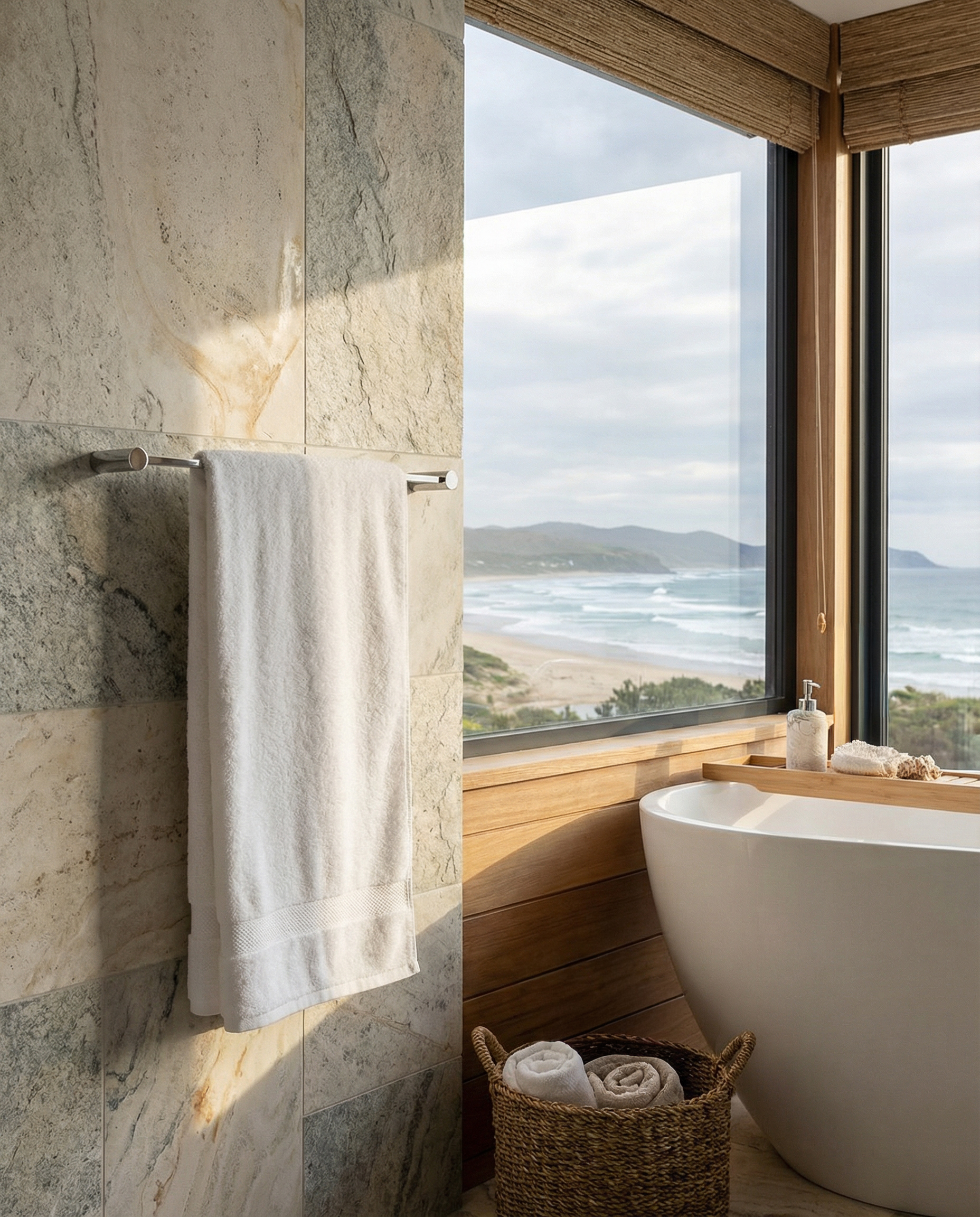
No element signals 'spa bathroom' more clearly than a freestanding bath. Positioned as a sculptural centrepiece, ideally under a window or in a space that allows 360-degree circulation, a freestanding bath changes the character of a bathroom entirely. Paired with a freestanding Meissen bath mixer in a complimenting finish, the freestanding bath becomes a complete design statement.
Meissen's freestanding mixers are designed to complement a range of freestanding bath profiles, from the deep, straight-sided soaking tubs favoured in contemporary spa design to the more traditional rolled-rim forms. Available in all five finishes, they provide the visual anchor that a spa-quality bathroom requires.
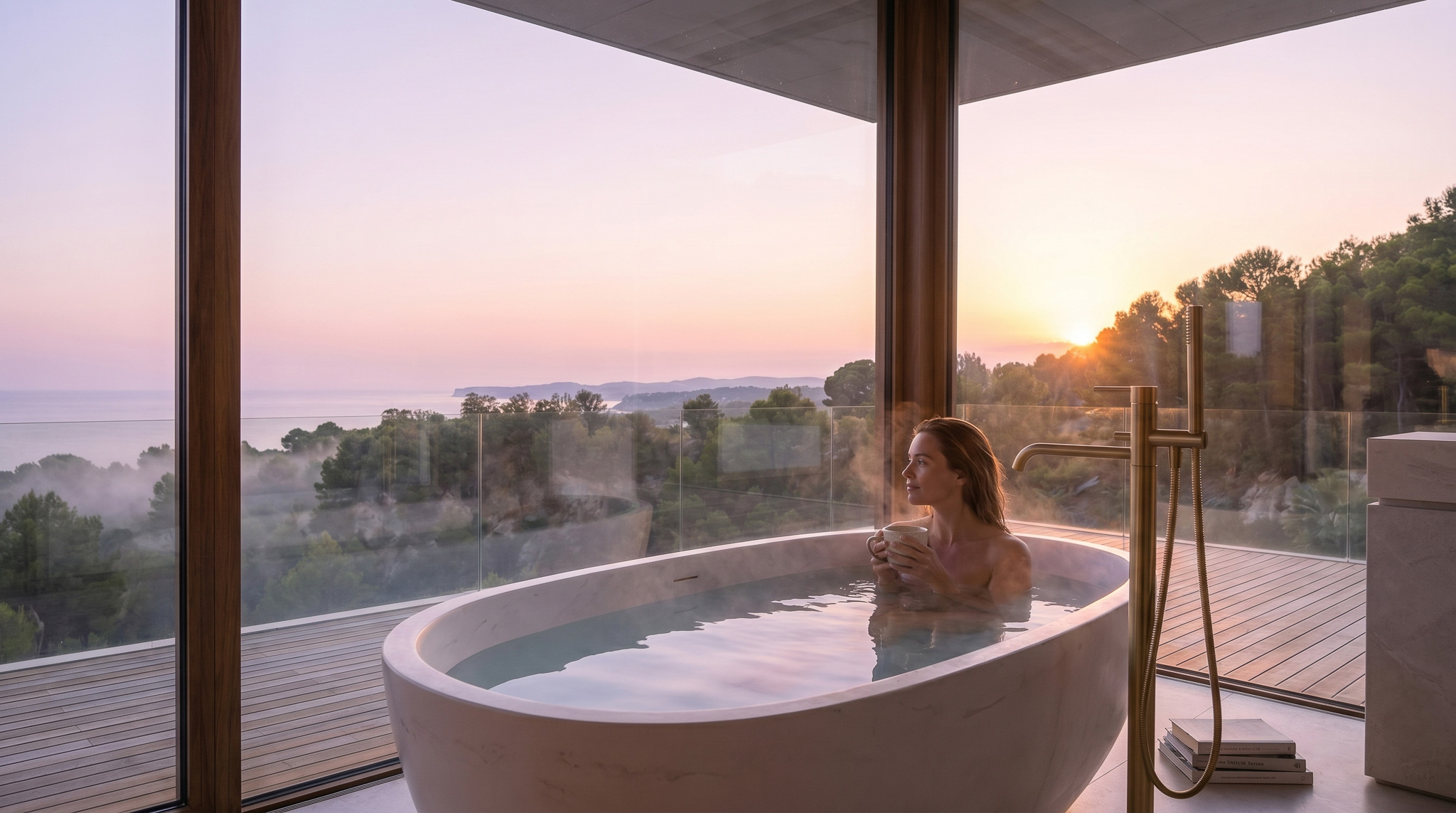
Creating a spa bathroom with Meissen begins with finish selection: choose the finish that best supports your material palette, and apply it consistently across all tapware, accessories, and shower components. Then build the material palette of the bathroom around that choice, prioritising natural textures, warm lighting, and spatial simplicity.
The full Meissen range is available at mymeissen.com, where you can explore every product category and finish option. Find a stockist at mymeissen.com/find-a-store to experience the products in person; the quality of a spa bathroom is always best understood through touch.
What is a spa bathroom and how is it different from a standard bathroom? A spa bathroom is designed to replicate the sensory experience of a professional wellness retreat within a residential setting. Unlike a standard bathroom, which prioritises basic function, a spa bathroom is defined by deliberate material choices (natural stone, timber, honed surfaces), controlled lighting, thermostatic water temperature, and a minimalist layout that removes visual noise. The difference is primarily one of intention: every design decision in a spa bathroom serves the experience of restoration and calm.
How much does it cost to create a spa bathroom in South Africa? Costs vary significantly depending on the size of the space, the material specification, and the quality of the fittings. A mid-range spa bathroom renovation in South Africa typically starts at R80,000–R150,000 for a full remodel including tiling, fittings, and accessories. High-specification projects using premium stone, freestanding baths, and thermostatic shower systems can exceed R300,000. The most cost-effective approach is to invest in high-quality tapware and shower systems, as these have the greatest impact on the daily experience, and keep the material palette simple and consistent.
What type of shower is best for a spa bathroom? A thermostatic shower system with a large overhead rainfall rose is the standard specification for spa-quality bathrooms. Thermostatic control is non-negotiable: it eliminates temperature fluctuation and allows the user to step into water at the exact same temperature every time. A large-format overhead rose (250mm or wider) delivers the full-coverage rainfall pattern that defines the spa shower experience. Systems that combine an overhead rose with a separate hand shower provide maximum flexibility.
What finishes are most popular for spa bathrooms in South Africa in 2025 and 2026? The dominant trend has moved away from chrome toward warmer and more matte finishes. Satin Brass is currently the most popular choice for spa bathrooms with warm material palettes (timber, warm stone, plaster). Brushed Stainless Steel suits cooler, more mineral schemes. Graphite and matte black finishes are chosen for bathrooms with a darker, more dramatic atmosphere. Chrome remains relevant in more contemporary and minimal schemes. The key principle is consistency: a single finish applied across all fittings and accessories creates the coherence that spa design requires.
Do I need a freestanding bath for a spa bathroom? A freestanding bath is the single most impactful statement piece in a spa bathroom, but it is not a requirement. Many excellent spa bathrooms are built around an exceptional shower with no freestanding bath at all. The decision depends on how you actually use your bathroom: if you rarely or never take baths, investing in a freestanding tub at the expense of shower specification is the wrong trade-off. If bathing is part of your routine, a freestanding bath positioned as a sculptural centrepiece — with adequate circulation space around it — will transform the character of the room.
What accessories does a spa bathroom need? A fully accessorised spa bathroom requires towel rails, a hand towel rail, robe hooks, a shower shelf or niche, a soap dish or basket, and toilet accessories. The spa aesthetic demands that all accessories share a consistent finish and design language with the tapware and shower fittings — mixing styles and finishes undermines the sense of intentionality that defines the space. Concealed storage for everyday items keeps surfaces clear, which is essential to the spa effect.
Can a small bathroom be designed as a spa bathroom? Yes. Spa bathroom principles scale down effectively. In a smaller space, the priorities are: a high-quality shower system (the shower becomes even more dominant when there is no freestanding bath), a consistent finish across all fittings, warm lighting, and rigorous decluttering. Large-format tiles with minimal grout lines make a small bathroom feel more expansive. Wall-hung vanities free up floor space and create a cleaner visual plane. A small bathroom executed with precision and quality materials will outperform a large bathroom that is poorly specified.